
Print-On-Demand SEO Automation Tool: Write Titles, Descriptions & Tags In Bulk With AI
Overview: Discover how the Bulk POD Product Creator uses AI-powered automation to generate SEO-optimized titles, descriptions, and tags for print-on-demand products—at scale. This post explains how the tool analyzes artwork, writes unique metadata for every product, and helps sellers maximize visibility, click-through rates, and organic growth by automating the most tedious part of the POD workflow.
Introducing the Print-On-Demand SEO Automation Tool
When it comes to print-on-demand, most sellers understand the importance of great artwork — but what truly drives visibility and sales is great metadata. Search engines, marketplaces, and discovery algorithms don’t see your images the way a human does — they rely on text. Titles, descriptions, and tags are what connect your products to actual search traffic.
That’s exactly where the Bulk POD Product Creator steps in.
In this role, it acts as a dedicated print-on-demand SEO automation system — an AI-powered metadata engine that transforms your catalog’s visibility by writing all of your POD product titles, descriptions, and tags automatically, in bulk.
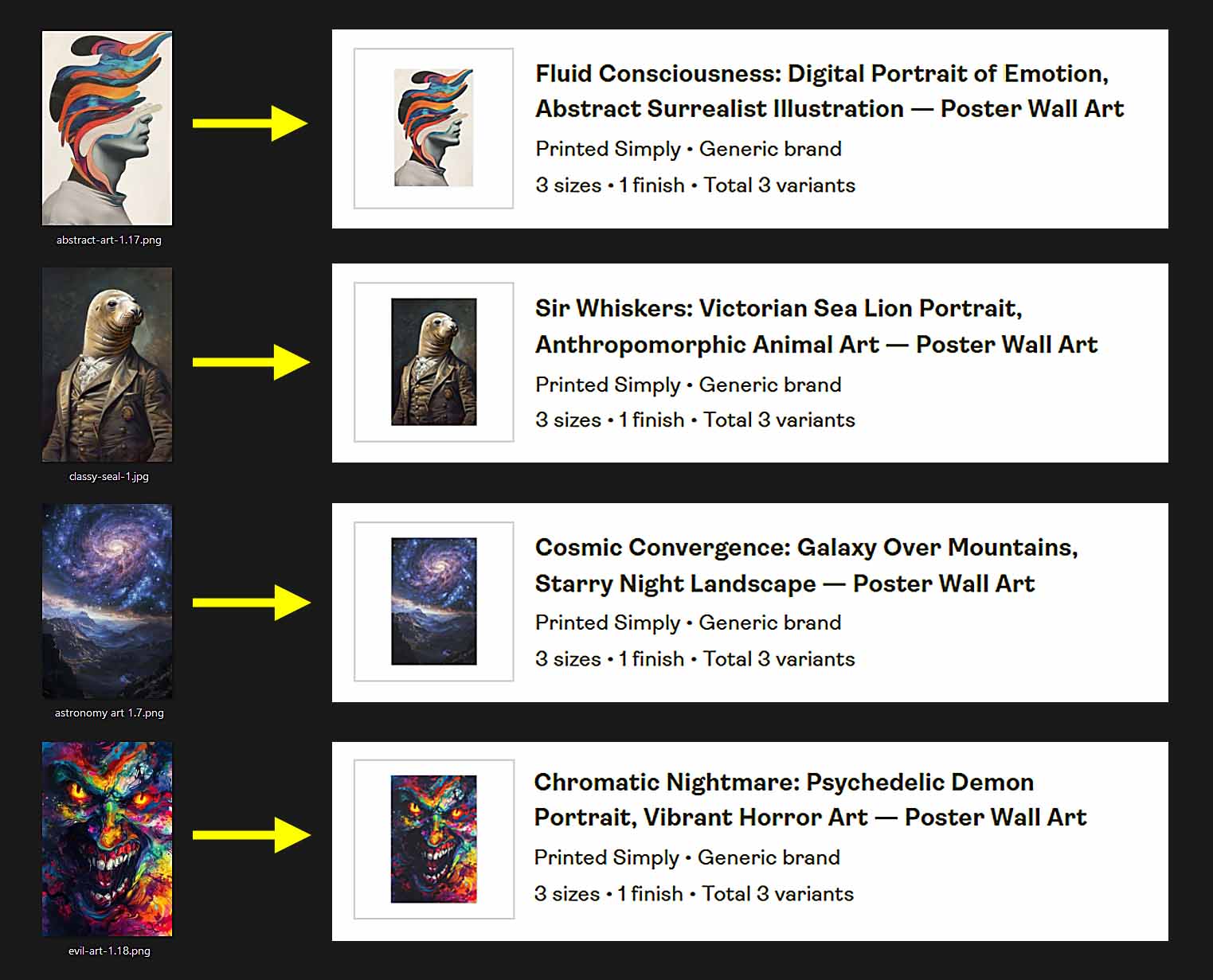
This isn’t keyword guessing or templated text generation. The system actually reads the artwork image itself — analyzing what’s in the design, understanding its tone and composition, and then generating descriptive, natural-sounding product metadata that performs well both for human readers and for search algorithms.
The tool produces three core SEO deliverables for every product it processes:
- Titles — concise, keyword-driven, and visually descriptive. Each title accurately reflects the image content and uses search-relevant language that customers actually type into marketplaces and Google.
- Descriptions — long-form, natural, and semantically rich. These read like they were written by a human who genuinely looked at the artwork — detailed enough to engage real shoppers while containing the SEO structure algorithms favor.
- Tags — high-intent, contextually relevant keywords that describe both the subject and the artistic style of the design, helping products rank for niche and long-tail search terms.
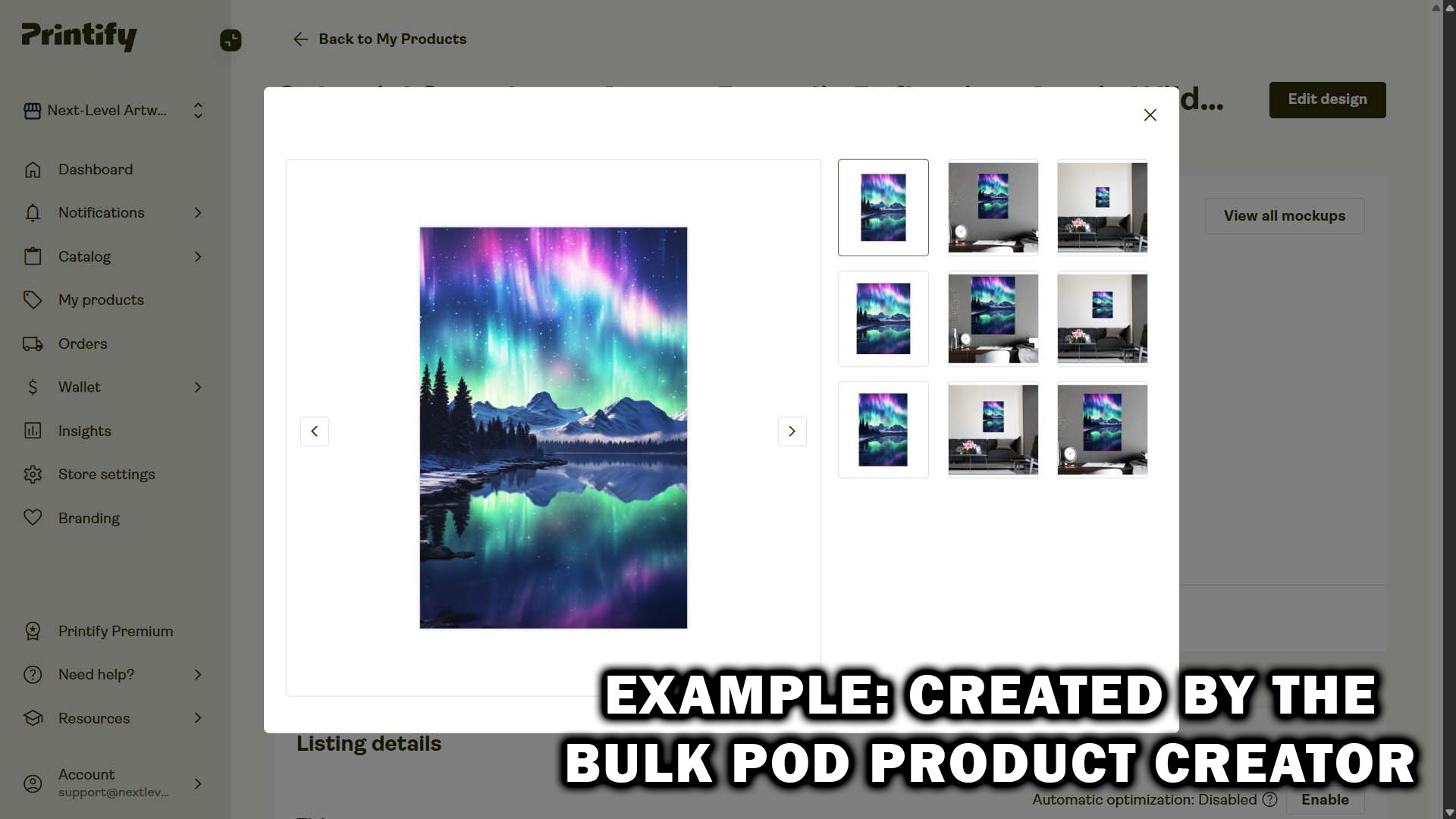
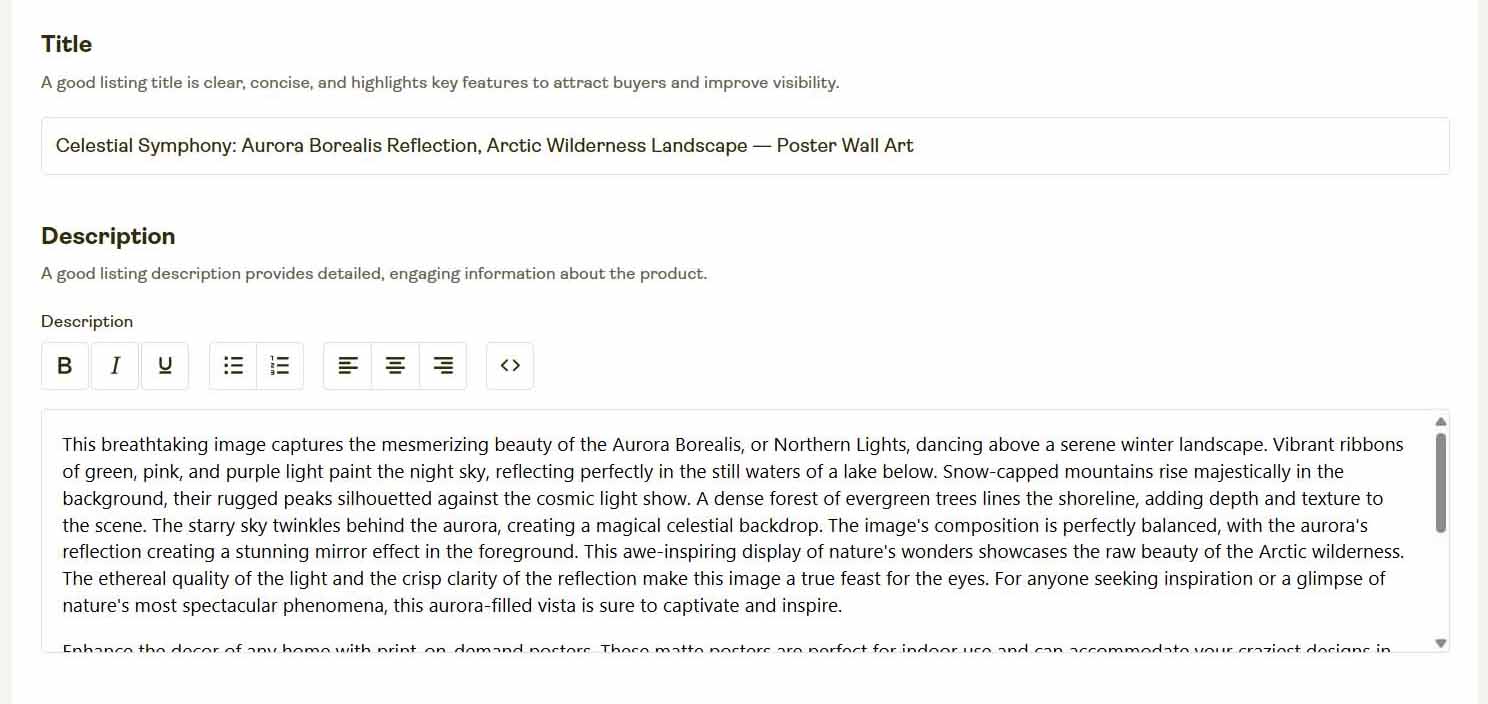
And the real advantage: scale.
Instead of spending hours writing titles and descriptions for each listing, the tool handles hundreds or even thousands of products at once. Every design gets its own unique, AI-written text output — meaning your entire catalog can be fully optimized for search traffic automatically.
It’s the kind of automation that doesn’t just save time — it directly improves discoverability, click-through rates, and organic growth potential for your entire store.
How the AI Understands and Writes for Each POD Product
The key to effective SEO automation is context awareness. The AI engine doesn’t rely on pre-written templates or random keyword injections. It begins by analyzing your artwork image directly to understand what the product actually depicts — and then it writes metadata that aligns perfectly with that visual content.
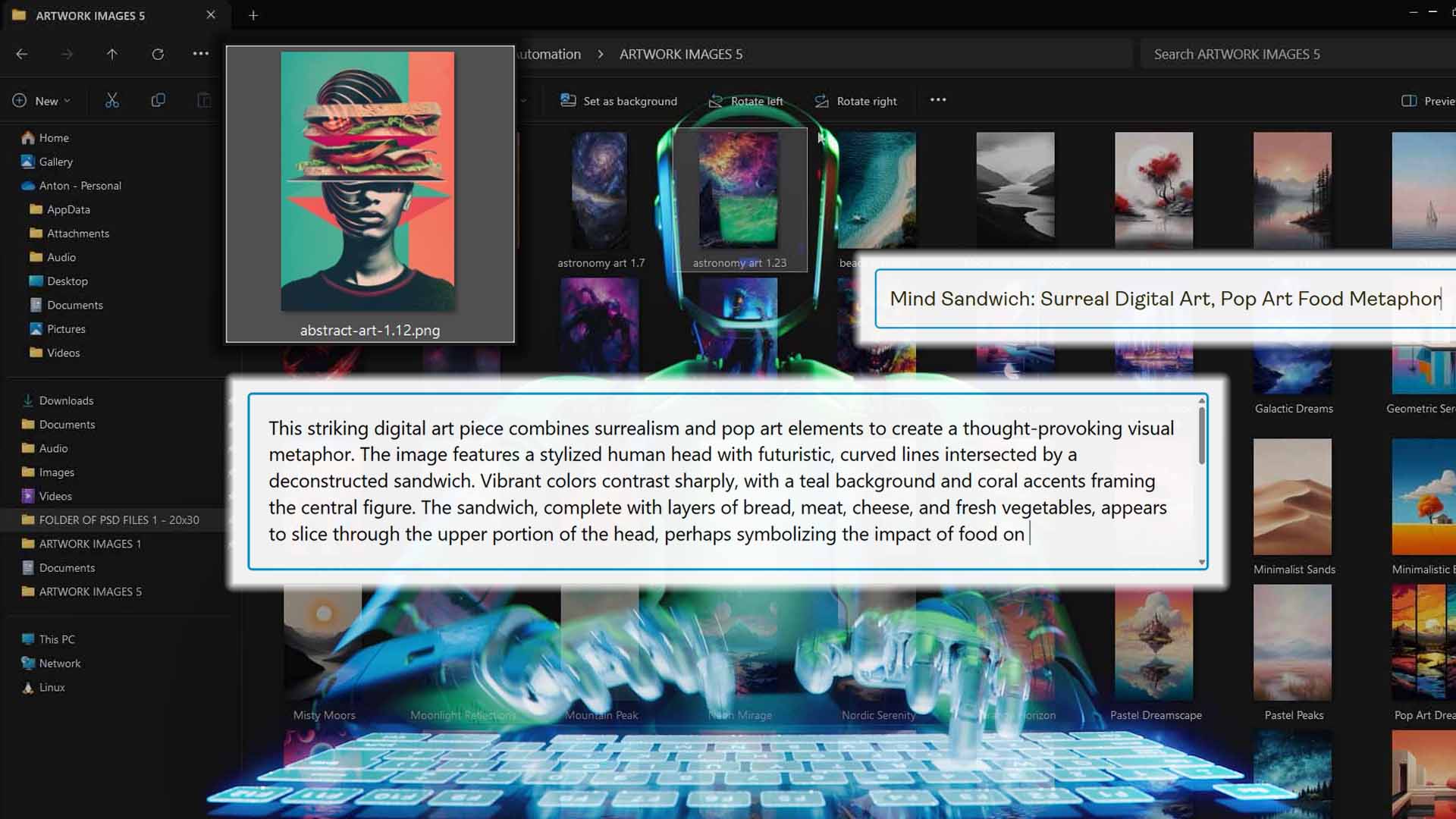
Here’s how it works under the hood:
- Object Detection: The AI identifies the main visual elements — for example, a mountain landscape, a space scene, a cute animal illustration, or a typography-based design. It recognizes both physical objects and stylistic features.
- Theme Recognition: It then classifies the overall concept or emotion conveyed — e.g., adventure, serenity, humor, motivation, nostalgia. This ensures the generated text aligns with the tone and purpose of the artwork.
- Color and Style Analysis: The AI evaluates color palettes, composition, and artistic style (minimalist, abstract, vintage, photorealistic, etc.), which helps it generate more precise descriptive language.
- Embedded Text Extraction: If your design includes text (like quotes, slogans, or typography-based artwork), the system reads and incorporates that wording into the final metadata so that search engines and buyers both understand what the design says.
- Contextual Keyword Mapping: Using its understanding of both the image content and common buyer search patterns, the AI generates natural, keyword-rich text that accurately represents what customers might search for — without the awkward, spammy keyword stuffing that damages readability and SEO ranking.
The result:
Every title and description sounds like it was handcrafted for that specific product. Tags are not random strings of keywords — they’re data-backed, visually grounded search terms that directly tie to what’s visible in the artwork.
Because this system works on a per-image basis, no two outputs are alike. Your catalog doesn’t get hit with duplicate or repetitive text. Each product gets its own unique, human-sounding voice, ensuring freshness, diversity, and optimal discoverability across your listings.
This is what separates real AI-powered SEO automation from “fill-in-the-blank” generator scripts. It’s not just fast — it’s contextually accurate, visually aware, and optimized for both humans and algorithms simultaneously.
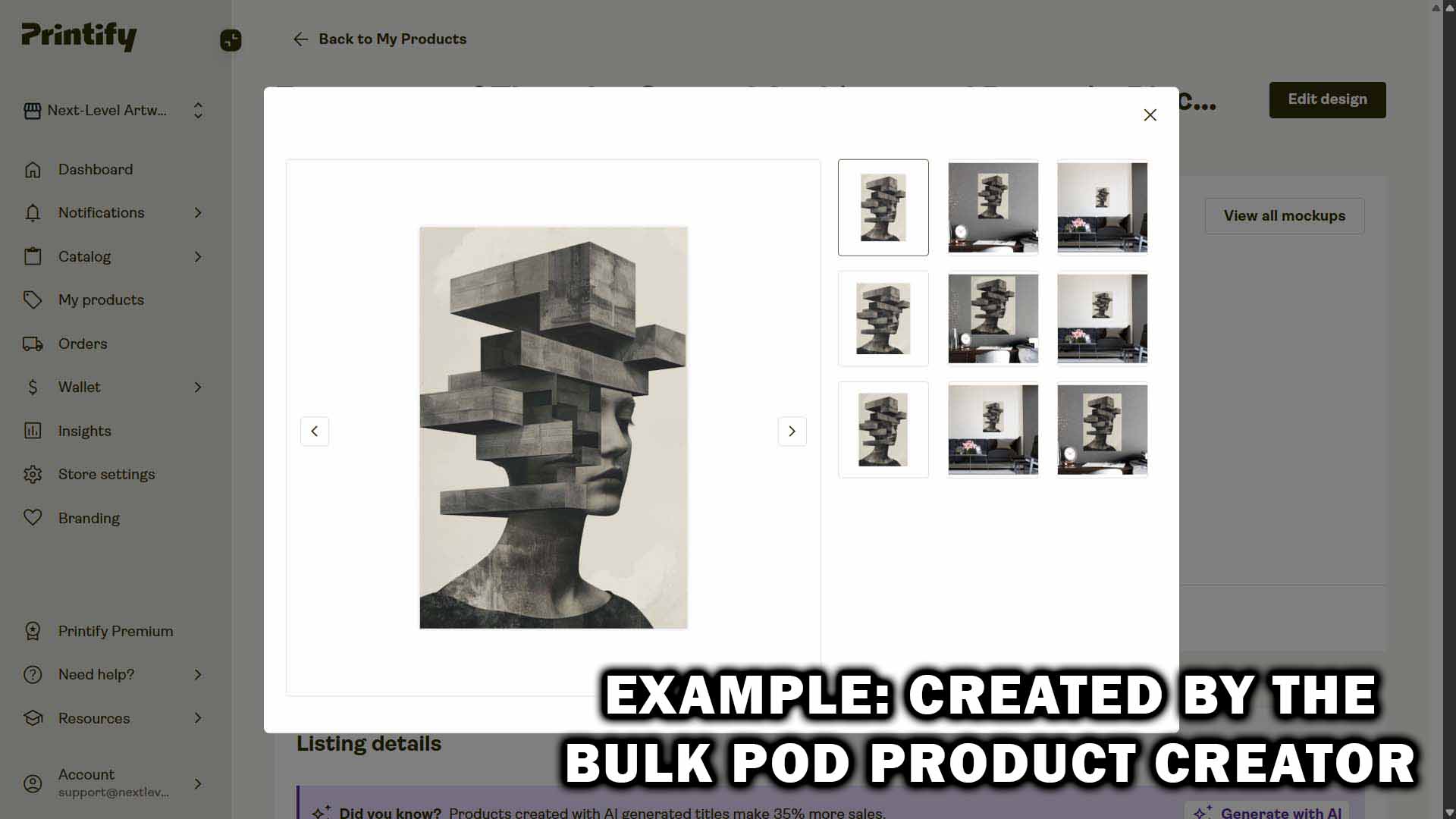
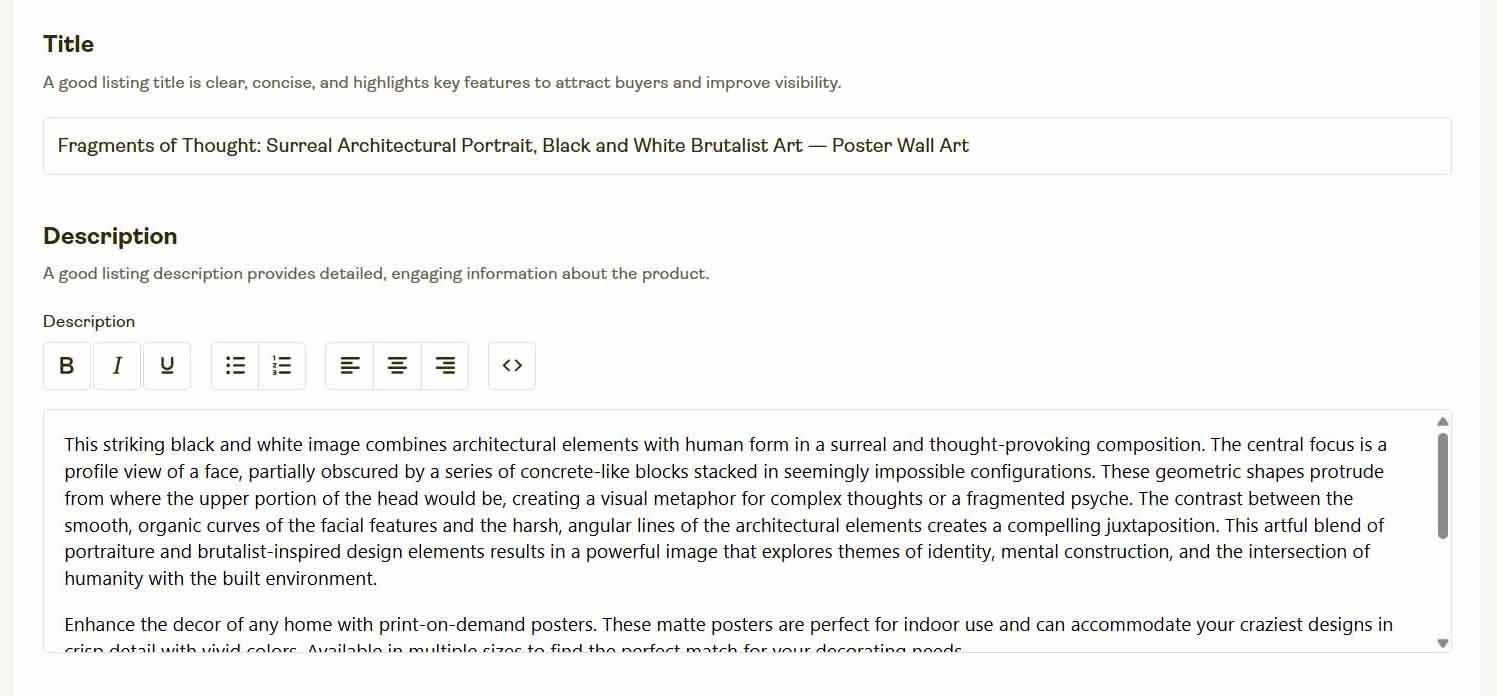
The Workflow — How POD Sellers Use This AI SEO Automation Tool
Using AI to write SEO metadata for your print-on-demand listings isn’t complicated — it’s simpler than doing it manually, yet infinitely more powerful.
Here’s what the typical workflow looks like for a seller using the Bulk POD Product Creator as an SEO automation engine:
- Upload Your Artwork Designs: Upload your entire batch of designs at once — whether that’s 10, 100, or 1,000. Each artwork file becomes an individual product record for the AI to analyze.
- Select Your Example Product: Choose an existing product from your store as the Example Product. This defines the core structure (product type, pricing, variants, and mockups), ensuring all SEO outputs follow a consistent format.
- Enable AI SEO Automation Mode: With one setting, you activate the system’s SEO automation mode. From this point, every artwork you’ve uploaded will be analyzed and assigned unique, AI-written titles, descriptions, and tags.
- Let the System Write for You: The AI processes each image, reading its visual content and generating search-optimized metadata. It produces perfectly formatted text fields that can be inserted directly into your product listings or exported for later use.
- Review, Adjust, or Publish: Once the process completes, you can review the AI’s outputs, make any adjustments you prefer, and either export the metadata to your platform or publish directly.


That’s it — your entire catalog is now SEO-optimized automatically.
This workflow replaces hours or even days of manual copywriting with a single automated batch process. It’s the difference between typing 500 product descriptions by hand versus letting a system that understands your artwork write them all — faster, smarter, and more consistently.
The AI doesn’t just accelerate your workflow — it elevates it. You end up with listings that are more descriptive, more keyword-aligned, and more visible to search engines and buyers alike.

What Makes AI Print-on-Demand SEO Automation Better Than Manual POD Copywriting
The difference between writing your own product titles and letting an AI system do it isn’t just about convenience — it’s about quality, scale, and data-backed precision. Manual SEO writing limits how far you can grow. AI automation, on the other hand, removes that ceiling entirely.
Here’s what sets the two apart:
- Speed: AI generates hundreds of SEO-optimized titles, descriptions, and tags in minutes — something that would take a human hours or even days. The faster your listings go live, the faster they can start ranking and driving traffic.
- Consistency: Every AI-written title follows the same clean, structured, brand-aligned format. No mismatched phrasing, no forgotten tags, no disorganized wording. Your catalog looks cohesive — and cohesive catalogs rank and convert better.
- Depth: AI sees what most humans miss. It recognizes visual nuances — the difference between a “retro synthwave skyline” and a “minimalist neon cityscape.” These subtle distinctions produce more accurate and descriptive metadata that captures search intent far more effectively.
- Scalability: When every product’s metadata writes itself, there’s no longer a bottleneck. You can expand your catalog indefinitely without hiring copywriters or spending days typing repetitive text. The larger your store, the greater your search footprint — and now, there’s no added workload to get there.
- Data-Driven Accuracy: The AI doesn’t guess. It draws from massive language datasets, analyzing patterns in real search behavior across platforms and marketplaces. That means it knows which phrases buyers actually use — not just what sounds good.

The outcome is a catalog that not only looks professionally written but also performs like it was SEO-optimized by a dedicated team — except the “team” is just your automation running quietly in the background.
SEO Impact — Why Bulk Metadata Optimization Drives Print-on-Demand Growth
Every POD seller understands the importance of SEO — but most underestimate the impact of scale. Optimizing a few listings manually is fine; optimizing hundreds or thousands is where the real growth happens.
By automating metadata generation across your entire catalog, you create a network of optimized listings — each one acting as a new entry point for search engines and marketplace algorithms to discover your products.
Here’s how that translates into tangible growth:
- More Listings Indexed by Search Engines: Search engines love fresh, unique content. When each listing has its own original, descriptive title and description, your products are more likely to be indexed quickly and ranked across a wide range of search terms.
- Higher Click-Through Rates: AI-generated titles read better because they’re naturally descriptive and emotionally resonant. They’re written the way people search — not the way templates sound. This leads to higher CTRs on both Google and marketplace search pages.
- Improved Marketplace Visibility: Platforms like Etsy, Shopify, and other POD integrations reward well-structured metadata. When every product in your store follows a clean, consistent format with optimized titles and tags, your entire shop gains favor in search rankings.
- Broader Traffic Diversity: Instead of all your products competing for the same five high-volume keywords, AI-generated metadata spreads your reach across hundreds of long-tail phrases. This creates dozens of additional “doors” through which new customers can discover your work.
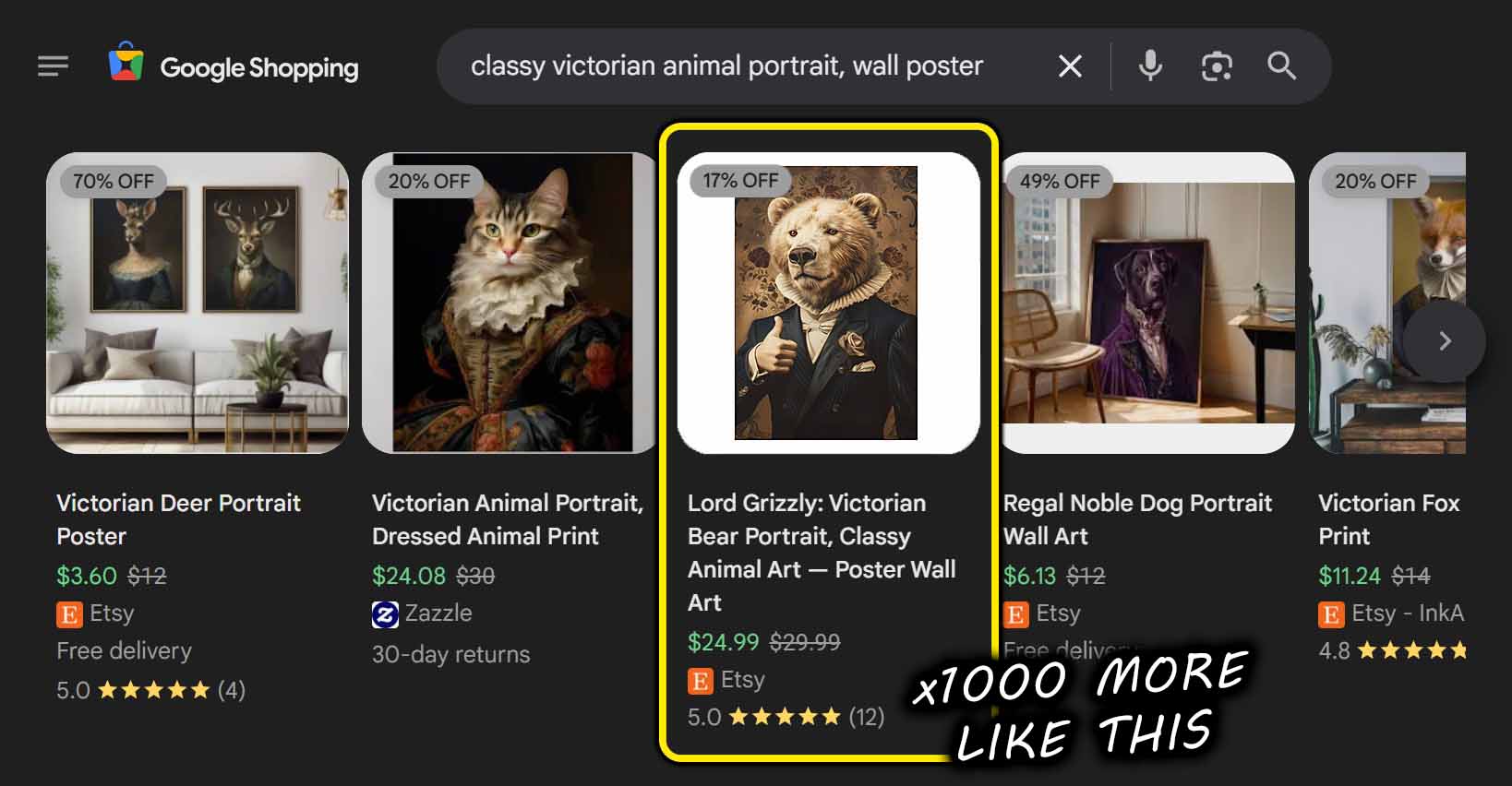

The best part? The SEO impact compounds. Every new batch of AI-optimized listings reinforces your store’s visibility, helping older listings perform better over time. The more you automate, the stronger your overall search presence becomes.
Automation doesn’t just help you publish faster — it helps you get found faster, and stay found longer.
Conclusion — Let AI Handle Your SEO, While You Handle the Creativity
Success in print-on-demand isn’t about who designs the most — it’s about who gets seen the most. You can have the best artwork in your niche, but if your listings don’t show up in search results, no one ever discovers them.
That’s why automating your SEO isn’t a luxury — it’s an advantage. The Bulk POD Product Creator eliminates the single most tedious and time-consuming task in the POD workflow: writing metadata. It handles all your titles, descriptions, and tags automatically, ensuring every product you publish is fully optimized and ready to perform.
By removing that layer of manual labor, you gain back what truly matters — your time, energy, and creativity. You stop grinding through endless copywriting sessions and start focusing on what actually grows your business: designing new products, experimenting with ideas, and building your brand.
Stop writing the same product descriptions for the hundredth time — let AI handle your SEO while you handle the creative work that actually grows your store.
Explore the Bulk POD Product Creator today and experience what it feels like to have your entire catalog written, optimized, and ready to sell — automatically.