Can You Make An AI Agent To Write Printify Product Titles, Descriptions & Tags?
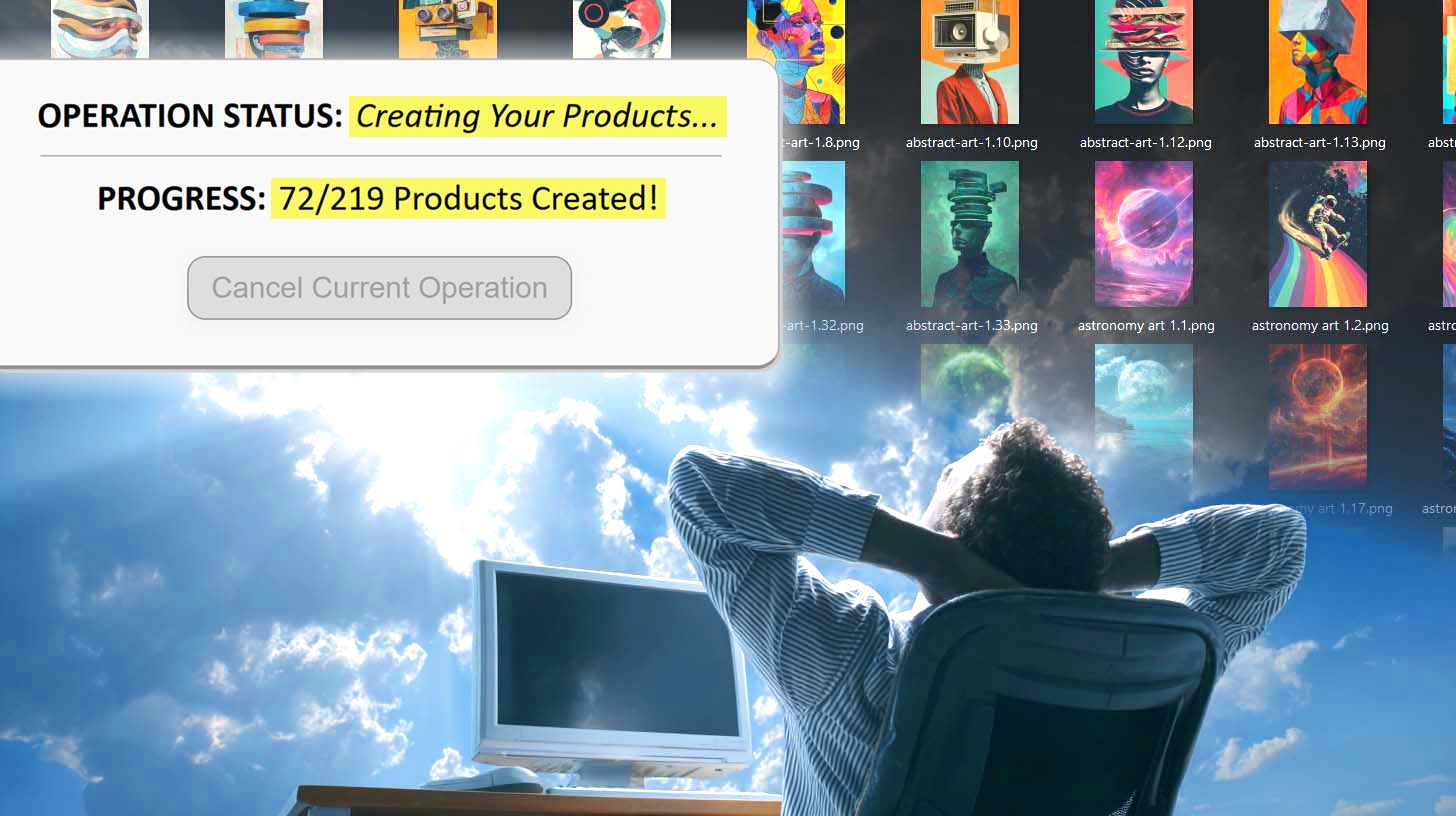
Overview: This post explores whether an AI agent can reliably automate writing product titles, descriptions, and tags for Printify, why "send clicks to my browser" automations are intrinsically error-prone, and how the Bulk POD Product Creator is an effective tool for automatically writing titles, descriptions and tags for all your Printify products using AI.

Why Manually Writing Printify Titles, Descriptions, and Tags Slows Your Growth
If you’re still manually writing every product title, description, and tag inside Printify, you’re quietly throttling your business growth. It’s not just tedious—it’s a productivity bottleneck that directly caps your income potential.
Every minute spent typing repetitive SEO text for yet another T-shirt, poster, or mug listing is a minute not spent designing new artwork, testing ad creatives, or improving your product line. This kind of busywork doesn’t scale, and the more products you add, the heavier the manual load becomes.

At scale, you hit an invisible wall—where creating new listings becomes so exhausting that growth stalls completely. That’s the core problem automation solves.
If you’re reading this, you’re thinking the right way: “There has to be a faster, smarter way to do this.”
And there is. Many Printify sellers eventually consider delegating this SEO grunt work to AI agents—automated systems designed to perform multi-step workflows like navigating browser interfaces and typing text into fields. It’s a natural next thought.
So, can you build or use an AI agent to automatically write your Printify titles, descriptions, and tags for you? We’ll explore that question here—and then we’ll look at a much more efficient, purpose-built tool that achieves this goal cleanly, safely, and at scale: the Bulk POD Product Creator.
Can an AI Agent Write Printify Product Titles, Descriptions, and Tags?
The short answer: technically maybe, but practically no.
AI agents—such as those powered by ChatGPT’s Agent Mode or similar browser-automation frameworks—can, in theory, simulate your actions inside Printify’s interface. They can “see” the page, click on fields, and type in generated text. But that doesn’t mean they can reliably or efficiently perform this task across an entire product catalog.
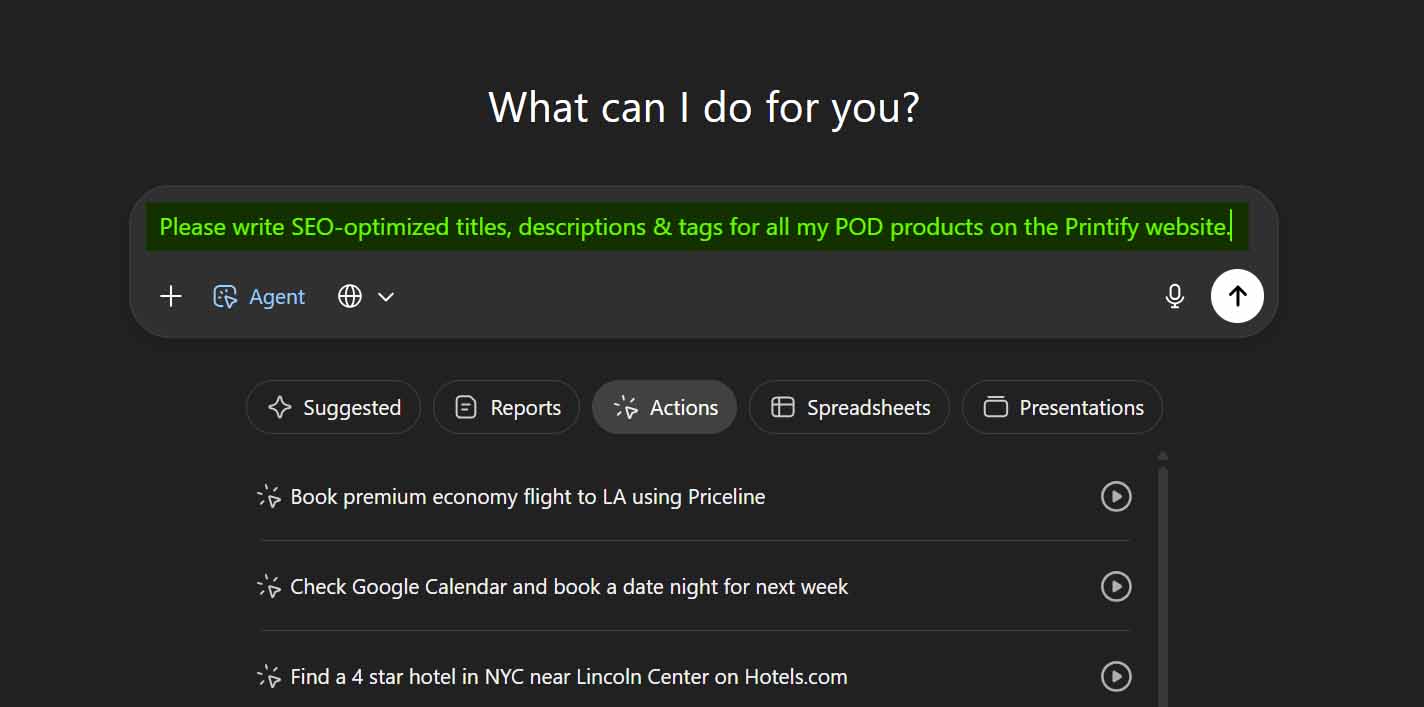
Let’s unpack why:
- Printify’s multi-step workflow is far too complex. Creating or updating product listings isn’t a single action—it’s a sequence of dependent screens, modals, and save states. An agent would need to dynamically track each step, adjust to load delays, and handle unexpected popups or UI shifts. One minor website update could immediately break the entire automation.
- Captchas and security systems stop bots cold. Printify uses systems like Cloudflare to detect and block automated activity. An AI agent trying to perform hundreds of repetitive actions could trigger those defenses—freezing progress or potentially flagging your account for suspicious activity.
- It can’t easily map artwork images to product pages. To properly SEO-optimize each product, the AI would need to know which image belongs to which product, analyze that image, then generate text that matches the artwork content and product type. Since the artwork files live separately from the product pages in Printify’s backend, this mapping alone becomes a massive headache to code or maintain.
- Browser automation isn’t built for production reliability. Agent-based browser control is the equivalent of tying strings to a puppet—it only works while every string is perfectly intact. Any lag, browser resize, modal change, or window refresh can make it miss a step.
- You’d be reinventing the wheel for a fragile solution. Even if you somehow get it to work once, you’ll spend more time maintaining it than you’d ever save. This isn’t sustainable, and it’s definitely not how serious print-on-demand businesses scale.
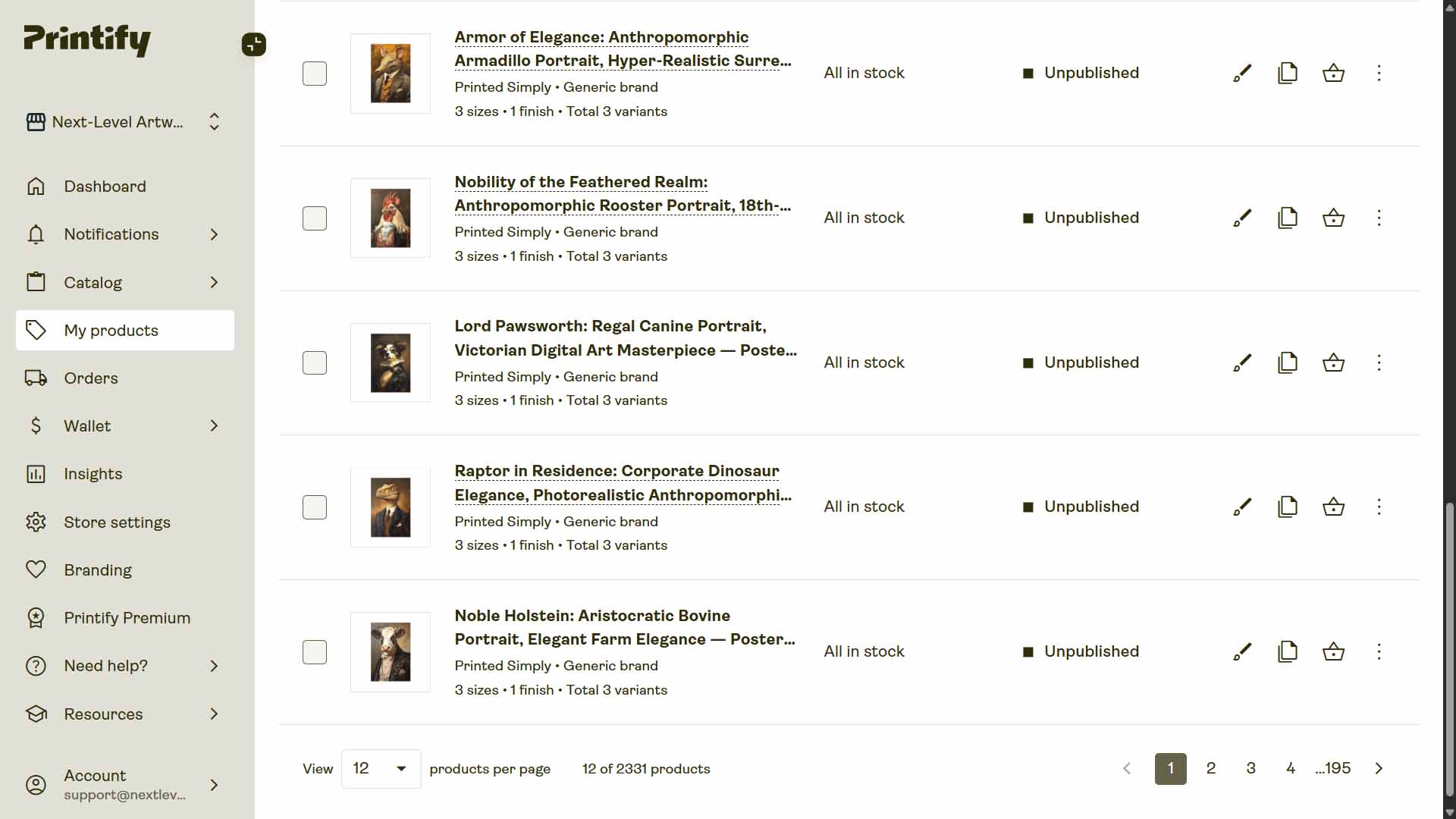

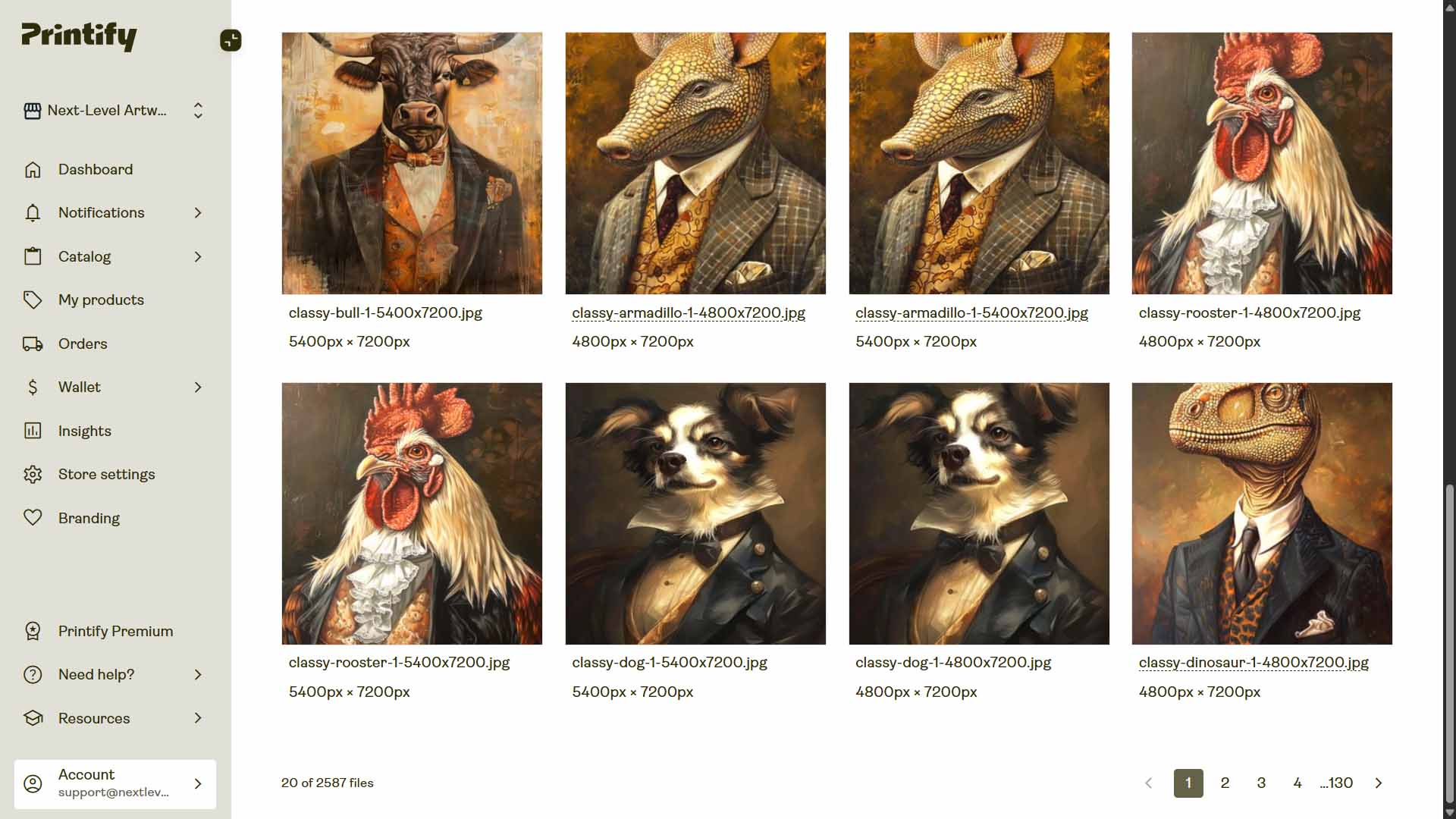
So while it sounds appealing to “just let an AI agent do the typing,” it’s an unreliable, fragile, and limited approach.
Fortunately, there’s a far more powerful way to automate this same work—one that doesn’t rely on browser trickery, but instead operates through the official Printify API to build and SEO-optimize products the right way.
That’s where the Bulk POD Product Creator comes in.
The Bulk POD Product Creator: The Proper Way to Automate Printify SEO
If you’re serious about scaling your print-on-demand store, you need a system that can handle both bulk product generation and AI-driven SEO optimization—efficiently, accurately, and without relying on fragile browser automation. That’s exactly what the Bulk POD Product Creator is designed to do.
At its core, the tool combines two powerful capabilities for Printify sellers:
- Automation of Printify product creation. It uses the official Printify API to replicate products based on a single Example Product blueprint—not by clicking through browser menus, but through direct, structured, code-level execution.
- AI-powered title, description, and tag generation for your POD products. It automatically analyzes your uploaded artwork images, generating unique, SEO-optimized text for every listing, ensuring consistent quality and keyword diversity across your entire catalog.

Together, these functions eliminate the slowest, most tedious parts of running a Printify business, while giving your store a sustainable SEO edge.
Step 1 & Step 2: Upload Artwork and Select an Example Product
Your workflow begins with uploading your artwork files—whether it’s ten, a hundred, or a thousand designs. The tool automatically queues and prepares every file, removing the need for manual organization or renaming.

Next, you choose your Example Product. This is any existing product in your Printify store that you want to replicate across all new listings. The Example Product defines:
- Pricing and variants (which sizes, colors, and base costs are carried over)
- Mockup structure (so your new products inherit the same layout and orientation)
- Print area configuration (ensuring your designs are placed accurately every time)

The automation engine then applies that same configuration to each new listing you’re about to generate.
For Printify sellers, this dual setup step is where efficiency starts to multiply. Instead of manually reselecting every size, color, and print file for each product, you just define it once—then the system mirrors that setup across every artwork in your batch.
How this helps print-on-demand sellers:
It standardizes your catalog, keeps product quality consistent, and saves hours that would otherwise be wasted on mechanical setup tasks.
Step 3: New Product Creation Rules and AI Image Recognition
Here’s where the Bulk POD Product Creator goes beyond conventional automation.
At this stage, the system takes each artwork image you uploaded and runs it through AI image recognition, identifying what’s visually represented—such as “geometric abstract pattern,” “sunset mountain landscape,” or “retro car illustration.”
Using that data, the tool generates three key SEO components for each product:
- AI-written titles that accurately summarize the artwork content
- AI-generated descriptions that provide context and keyword-rich phrasing
- AI-generated tags tailored to the visual subject matter, not generic placeholders
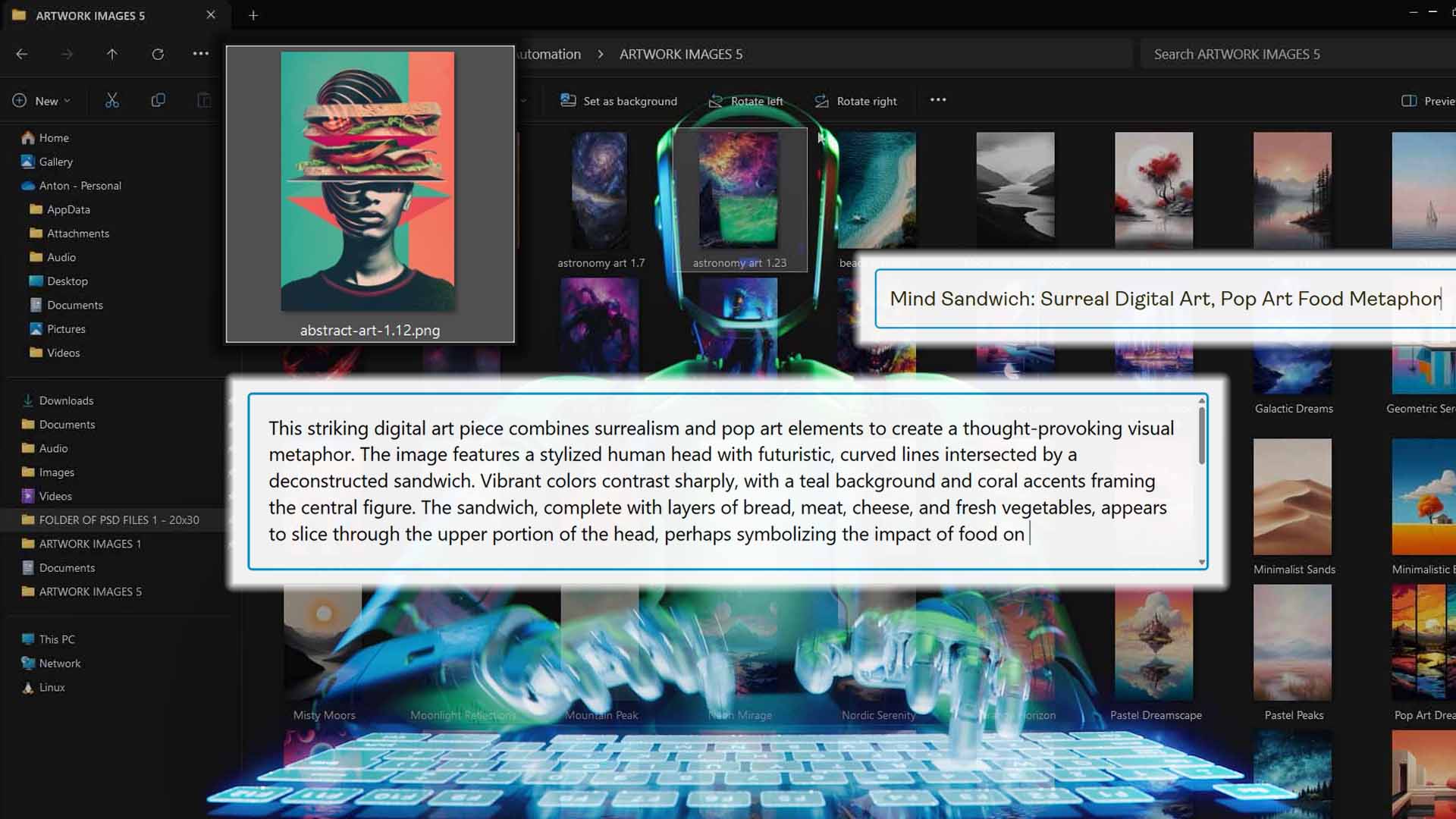
This happens for every uploaded image, ensuring that even if you’re adding hundreds of new designs, each one receives its own unique, accurate, SEO-optimized metadata.
The result: your catalog grows rapidly, but each listing remains distinct, descriptive, and search-friendly—something that’s virtually impossible to maintain manually at scale.
Advanced SEO Customizations: Custom Text, HTML, and Title Modes
Beyond automation, Step 3 also gives you granular control over how your listings are formatted and optimized.

Custom Text / HTML Fields:
You can append reusable product-level text—for example, adding “—Canvas Wall Art” or “—Printed T-Shirt” to your titles or descriptions. This lets you blend AI-generated artwork descriptors with your own contextual product info, maintaining both accuracy and SEO depth.
Simple vs. Compound Titles:
Choose between two title-generation styles:
- Simple Titles: concise, single-phrase outputs describing the artwork.
- Compound Titles: expanded titles that include one or more secondary descriptive segments, which you can fully customize. For example, a user could configure the format to include two or three subtitle components—such as:
“Surreal Ocean Horizon: Dreamlike Abstract Landscape, Moody Blue Tones, Minimalist Seascape.”
This gives you precise control over how detailed or keyword-rich your AI-generated titles become, depending on your SEO strategy and aesthetic preferences.
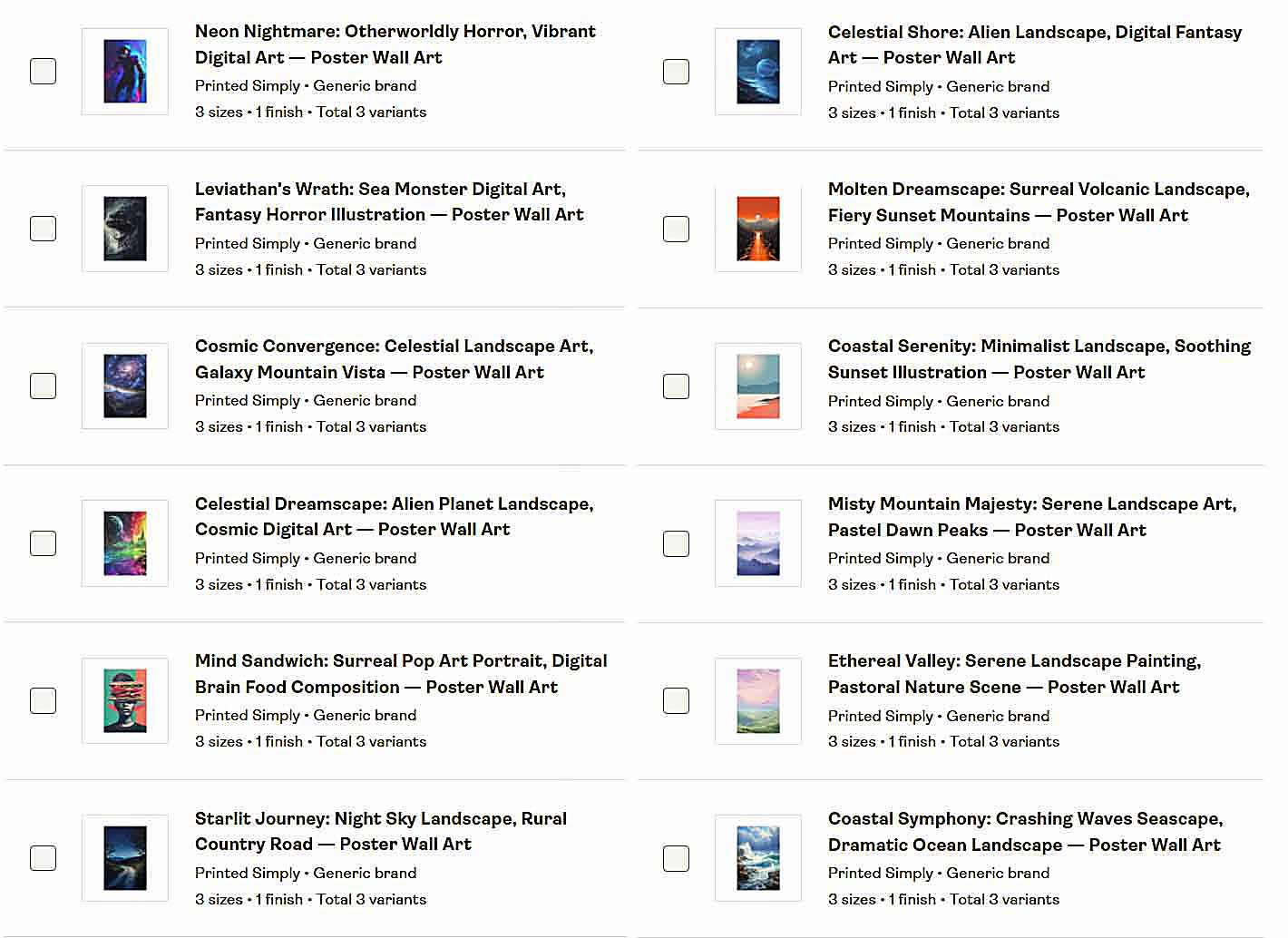
Consistent Formatting Across Your Catalog:
Because these customizations are defined once and applied automatically, every product follows the same standardized structure—reinforcing your brand’s SEO coherence and improving overall site indexing.
This advanced configuration transforms the Bulk POD Product Creator from a simple automation utility into a scalable SEO powerhouse. It doesn’t just mass-produce listings—it produces strategically structured listings, where every product title, description, and tag is crafted for maximum search visibility and consistency.
By combining AI image recognition with user-defined SEO formatting logic, the tool gives you the perfect blend of creative flexibility and automated precision—something no browser-driven AI agent could ever replicate.
AI Agents vs. API Automation: Two Very Different Worlds
It’s tempting to think an AI agent could simply “take over your browser” and perform all the steps you’d normally do yourself—clicking, typing, and saving your way through Printify’s product creation interface. But this "send clicks to my browser" approach to automation is fundamentally fragile.

When you rely on an AI agent to operate through a browser window, you’re effectively telling your business to depend on a moving target. One small website update—a rearranged button, a renamed field, a popup appearing one second too late—can instantly derail the entire automation. Even worse, such activity may trigger security systems like Cloudflare or Printify’s rate-limiting protection, potentially halting your operations midstream.
By contrast, the Bulk POD Product Creator communicates with Printify the proper way—through structured, authenticated API requests. This difference is enormous:
- Reliability: Browser automation scripts can break at any moment; API calls don’t depend on where buttons appear or how pages load.
- Speed: Browser-based automation works at human speed—clicking, scrolling, waiting. API automation runs at machine speed, completing large operations much more rapidly.
- Scalability: AI agents can only handle one active session at a time. The Bulk POD Product Creator can execute dozens or hundreds of product-generation calls in sequence, safely respecting rate limits while maximizing throughput.
- Security: Browser automation can look suspicious to site security systems. API automation uses official authentication keys and verified routes, meaning your store stays compliant and protected.
- Consistency: An AI agent’s outputs will vary depending on how well it “interprets” a page that day. The Bulk POD Product Creator generates standardized, perfectly formatted data structures every time.
- Maintenance: Agents need constant re-training when something changes in the UI. Our tool remains stable across Printify updates, because the underlying API contracts stay intact.

In short, the difference is night and day. The AI agent approach is an improvisation; the Bulk POD Product Creator is infrastructure.
How This Automation Drives More Traffic to Your Printify Store
The Bulk POD Product Creator doesn’t just save time—it systematically boosts the discoverability of your entire catalog.
By automating both the creation and SEO optimization of your Printify products, the tool helps you generate hundreds of fully optimized print-on-demand listings, each with unique, keyword-rich titles, descriptions, and tags. This has several tangible benefits for your business:
- Massively expanded keyword coverage. Every product receives unique SEO phrasing derived from its artwork image, meaning your store ranks for a far wider range of search queries.
- Higher relevance in image and product search. The AI image recognition system aligns each listing’s text content with the actual visual subject matter, improving search engine accuracy and engagement.
- Consistent metadata structure. Standardized titles, descriptions, and tags across your listings make it easier for search engines to crawl and categorize your content.
- Faster publishing velocity. You can release hundreds of new SEO-optimized listings in the time it would normally take to write a handful by hand—which compounds your visibility gains exponentially.
- Cumulative compounding traffic. Each new optimized listing functions as a micro landing page. The more listings you have, the more surface area your store has across Google, Etsy, and other product-search ecosystems.
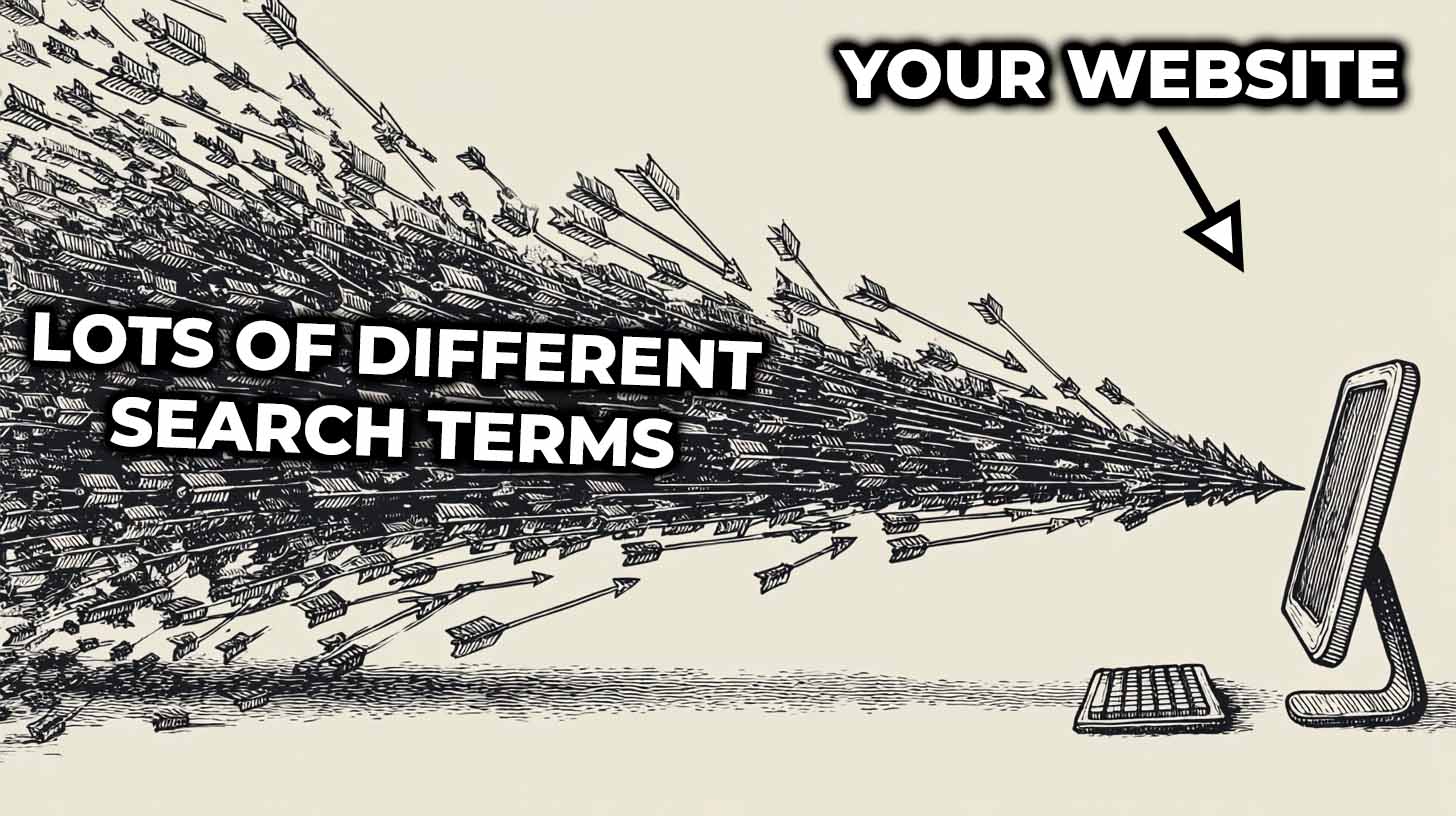
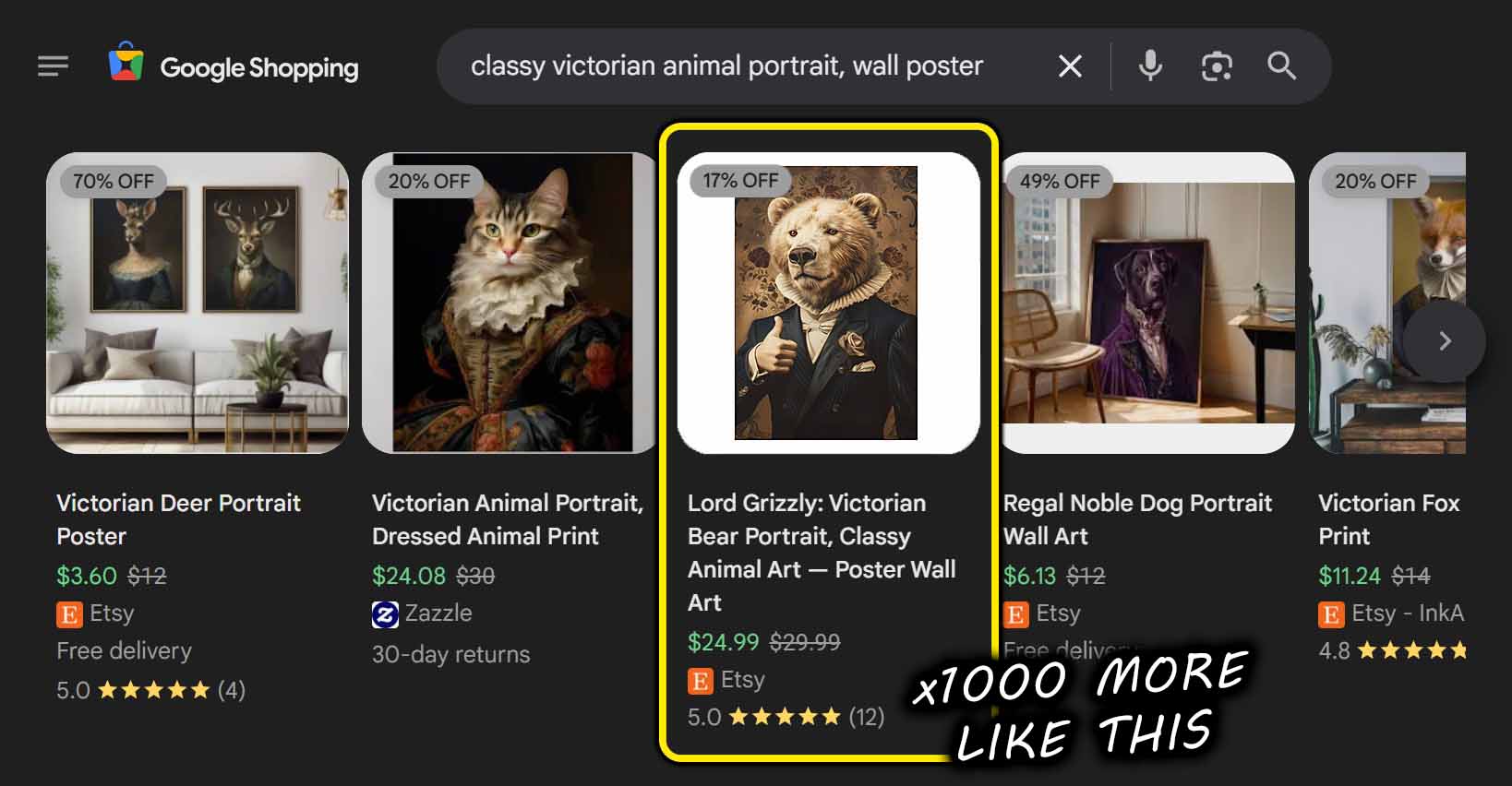
This is why proper automation—especially automation combined with AI—doesn’t just save effort. It directly increases revenue potential by expanding your reach and multiplying your entry points into organic discovery channels.
Conclusion: Stop Writing, Start Scaling
Manually typing product titles, descriptions, and tags is the bottleneck that holds most Printify sellers back from true scale.
Trying to hack together an AI agent to do it through your browser may sound clever, but in reality it’s unreliable, inefficient, and unsustainable.
The Bulk POD Product Creator was built specifically to solve this problem the right way—using the Printify API to create products and AI image recognition to write accurate, SEO-optimized metadata for each one.
- Automate repetitive work instead of wasting time on it
- Maintain consistent SEO quality across your catalog
- Rapidly scale your product volume without sacrificing accuracy
In short, you stop being the bottleneck—and start operating like a business owner with systems built for scale.
If you’re ready to offload the grunt work and let automation grow your Printify store for you, the Bulk POD Product Creator is the most efficient way to make it happen.